
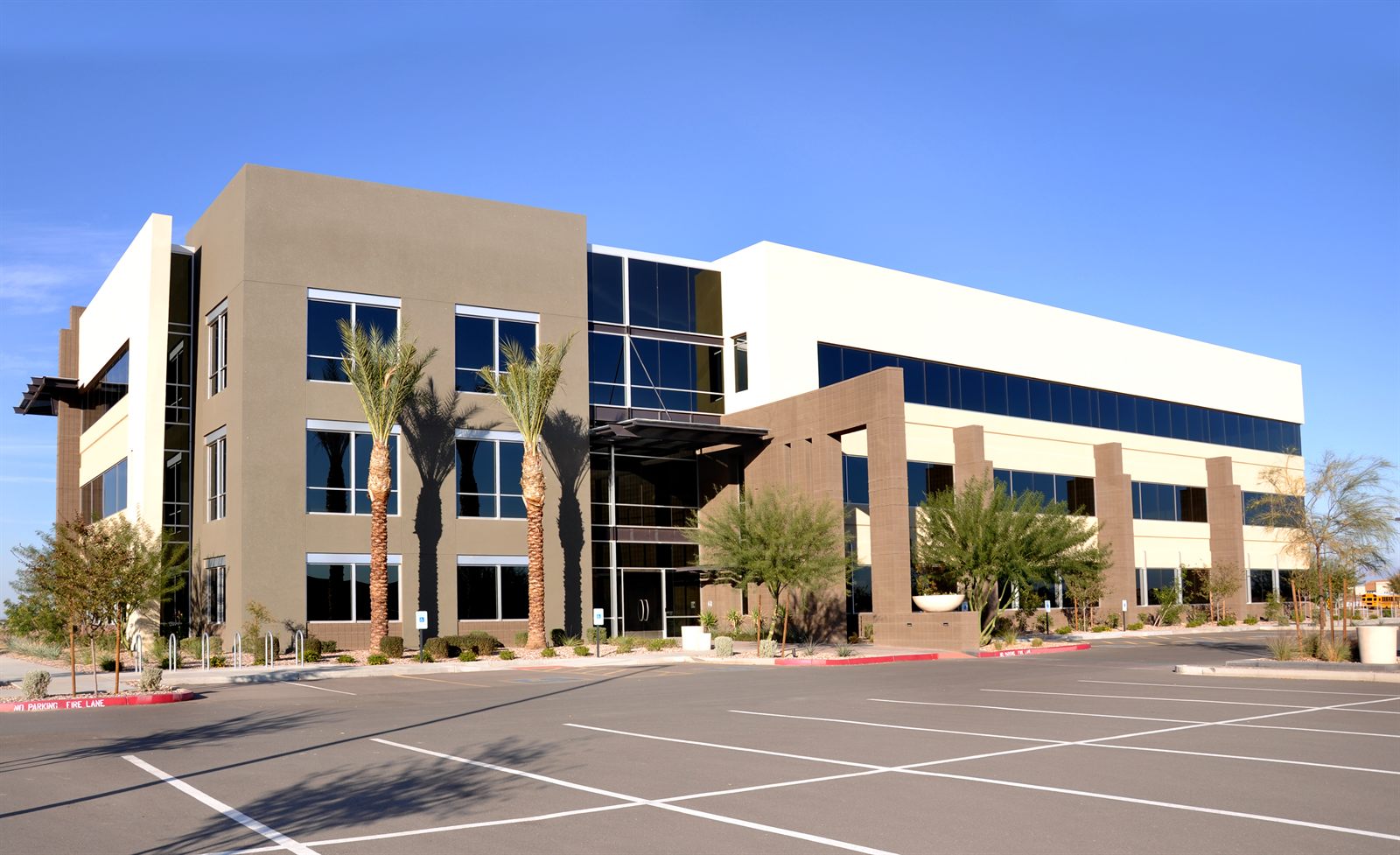
Commercial real estate financing is the umbrella term for loans secured by income-producing or business-use property — warehouses, flex industrial space, office buildings, retail centers, self-storage, and owner-occupied buildings where a company runs its own operations. It’s a different animal than a home loan. The lender is underwriting a property’s cash flow (or the borrowing entity’s balance sheet) as much as the person signing the note, and the loan structures — terms, amortization, prepayment rules — look nothing like a 30-year fixed. If you’re trying to figure out what kind of loan fits your industrial building, this is the map.
What Counts as Commercial Real Estate Financing
In my experience, borrowers lump everything “not a house” into one bucket, but this side of the lending world actually splits into a few distinct lanes. There’s owner-occupied commercial financing, where a business buys or refinances the building it operates out of — a manufacturer buying its own plant, for example. There’s investor-owned commercial financing, where the property is leased to tenants and the loan gets sized around the rent roll. And there’s short-term bridge financing, used to acquire, reposition, or stabilize a property before permanent debt takes its place. Each lane has its own lenders, its own paperwork, and its own risk profile.
One thing this article deliberately leaves out: SBA 504 and 7(a) mechanics. If you’re a small business buying the real estate your own company will occupy, an SBA-backed structure is often the better fit because of how those programs treat owner-occupancy and down payment — our SBA loan page covers that in detail, and I’d encourage you to start there if that’s your situation.
Who Actually Lends on Commercial Property
Financing for commercial property comes from a wider set of sources than residential lending does. You’ll run into:
- Bank and non-bank commercial lenders — conventional commercial mortgages for stabilized, cash-flowing properties
- Life insurance companies and conduit (CMBS) lenders — typically for larger, institutional-quality assets
- Credit unions and community banks — often a good fit for smaller owner-occupied deals
- Private and bridge lenders — for properties that need repositioning, lease-up, or a fast close before permanent financing is arranged
Loanatik works on the conventional and bridge side of that spectrum nationally, including small industrial and flex space — you can see the specifics on our industrial, warehouse, and flex financing page.
The Main Loan Types You’ll Encounter
Once you’re inside this world of commercial lending, the products break down roughly like this:
Owner-occupied commercial mortgages. Your business occupies most of the space and the loan is underwritten largely on business cash flow, not just the real estate. We go into how that changes the file in our complete guide to owner-occupied commercial mortgages.
Investor-owned / income property loans. The building is leased out — a small industrial park with three or four tenants, say — and the loan is sized to the rents the property actually produces, not the borrower’s W-2 income.
Bridge loans. Short-term financing used when a property isn’t stabilized yet: it’s vacant, under-leased, mid-renovation, or the borrower needs to close fast and refinance into permanent debt later. See what a bridge loan actually covers for the common use cases.
Terms, amortization schedules, and prepayment structures vary quite a bit by lender and by asset type, so I’d never tell a client to assume one deal’s structure will mirror another’s — get the specifics for your property before you model anything.
How Commercial Underwriting Differs From Residential
This is where most first-time commercial borrowers get surprised. On a home loan, the lender is largely underwriting you — your income, your credit, your debt-to-income ratio. On commercial real estate financing, the lender is underwriting the deal itself, and that shifts the whole conversation:
- Debt service coverage ratio (DSCR) — how much net operating income the property generates relative to the proposed loan payment — often matters more than personal income
- Loan-to-value tends to run lower than typical residential financing, meaning more equity in the deal up front
- Leases, rent rolls, and operating expenses get scrutinized the way pay stubs get scrutinized on a home loan
- Personal guarantees are common even when the borrowing entity is an LLC or corporation
- Amortization is frequently shorter than the loan term, which means a balloon payment or refinance down the road
Credit score, cash reserves, entity structure, and the property’s own financials are all weighed together in any commercial approval decision — no single factor decides it, and that’s worth remembering if you’re leaning on one strong number to carry a weak file.
Have an industrial, warehouse, or flex property in mind? Talk to us about industrial and flex financing and we’ll walk through which structure actually fits your deal.
Documentation You Should Have Ready
Whether you’re buying, refinancing, or bridging, commercial lenders generally ask for a similar core file: business and personal tax returns, an up-to-date rent roll and lease abstracts if the property is leased, a schedule of real estate owned if you hold other properties, an entity operating agreement, and a purchase contract or payoff statement. Gathering this ahead of time is the single biggest thing you can do to keep a commercial file moving — reactive document requests are what stretch timelines, not the underwriting itself.
Commercial Real Estate Financing FAQ
Does Loanatik lend on commercial property outside Arizona, California, Colorado, and Nebraska?
Our consumer home loans are limited to those four states, but our investor and commercial real estate financing — including industrial, DSCR, and bridge products — is available nationwide, subject to credit approval.
Is a bridge loan the same as commercial real estate financing?
A bridge loan is one type of commercial financing, generally used as short-term, interim debt before a property is stabilized enough for a permanent commercial mortgage. It isn’t the only option, and it isn’t automatically the right one — it depends on the property’s condition and lease-up stage.
Can I use commercial financing to buy the building my business operates from?
Yes — that’s owner-occupied commercial financing, and depending on the size of your business, an SBA-backed structure may also be worth comparing before you decide.
For borrowers who want to understand how lenders are increasingly required to track small business credit applications, the CFPB’s small business lending data resources are a useful, plain-language reference.
This article is general education, not financial advice or a commitment to lend. Loan programs, terms, and availability are subject to credit approval and may change. Loanatik LLC is an Equal Housing Lender. See our licensing & disclosures.
Underwriting a deal yourself? Grab our free BRRRR & fix-and-flip deal analyzer — Maximum Allowable Offer, DSCR, cash-on-cash, and a 5×5 sensitivity grid in one spreadsheet. Get the free spreadsheet →